Thursday, October 16, 2014

The Globalization of Culture


Some of the most amazing effects of globalization are the cultural changes and shifts that are occurring. As the world becomes more connected, people have a chance to learn about other cultures and connect with their own. At the same time, new cultures are appearing and developing as older cultures are slowly disappearing and assimilating themselves into the modern world.
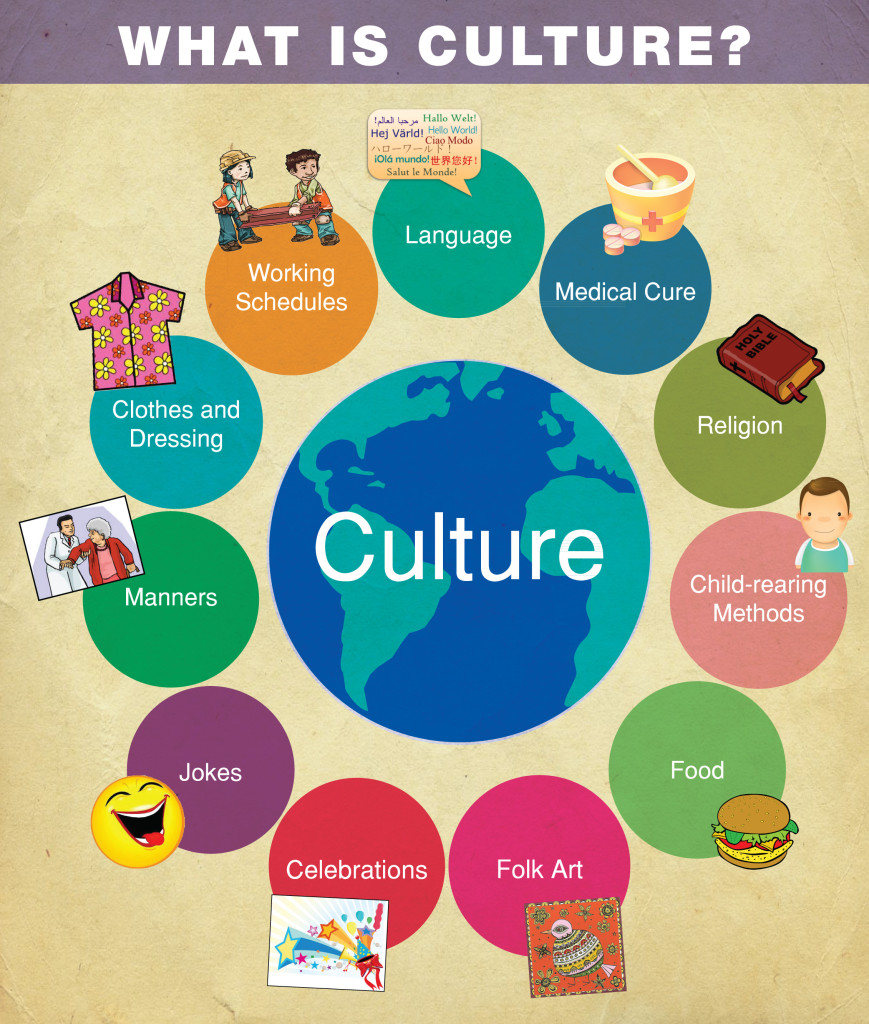
The major factor in the spread and change of world cultures is the internet. There are vast amounts of information about every culture imaginable, from ancient Egypt to modern U.S.A. Everyone with internet instantly has access to millions of songs, stories, fashions, rituals, images, and other content relating to all cultures. People in England can listen to folk music created in Africa. People in India can read books written in America. People in Australia can take part in a fashion movement started in Japan. Between the speed at which data travels and the vast amount of content online, cultural information can be distributed all over the world in a manner of seconds.

Culture, whether referring to the world as a whole or individual areas, has shifted and changed immensely because of globalization. One of the most incredible byproducts of the globalization of culture is internet culture. As the internet has grown and developed, people seeking an escape from the real world have created their own unique culture on the web. Websites like 4chan, Reddit, and Tumblr help to perpetuate and shape this internet culture. People who take part in this internet society feel connected to their fellows regardless of race, gender, sexuality, or distance. This online culture is challenging our traditional ideas of culture because it is not defined by normal means of geography, religion, or other factors.
Globalization has allowed many subcultures to pop up and grow as well. Just about anyone can get a website and post information, and many cultural groups have developed sites or forums that people can use to learn about their culture or connect with others in that culture. These cultural forums or websites can range from Native Americans and Indigenous Australians to gamers and Trekkies. The internet helps these groups to grow as more people become introduced to them and allows people who are part of these cultures to connect with others like them.
A general distribution of religions over the Earth
A major concern for many cultures because of globalization and the greater access to information about various cultures is “cultural appropriation.” Cultural appropriation is defined as “the adoption of some specific elements of one culture by a different cultural group.” Many people feel that is it wrong for others to adopt aspects of a culture if they are not a part of it. However, it is difficult to say where the line should be drawn, for many parts of all cultures such as language and religion could be considered to have been appropriated from other cultures.


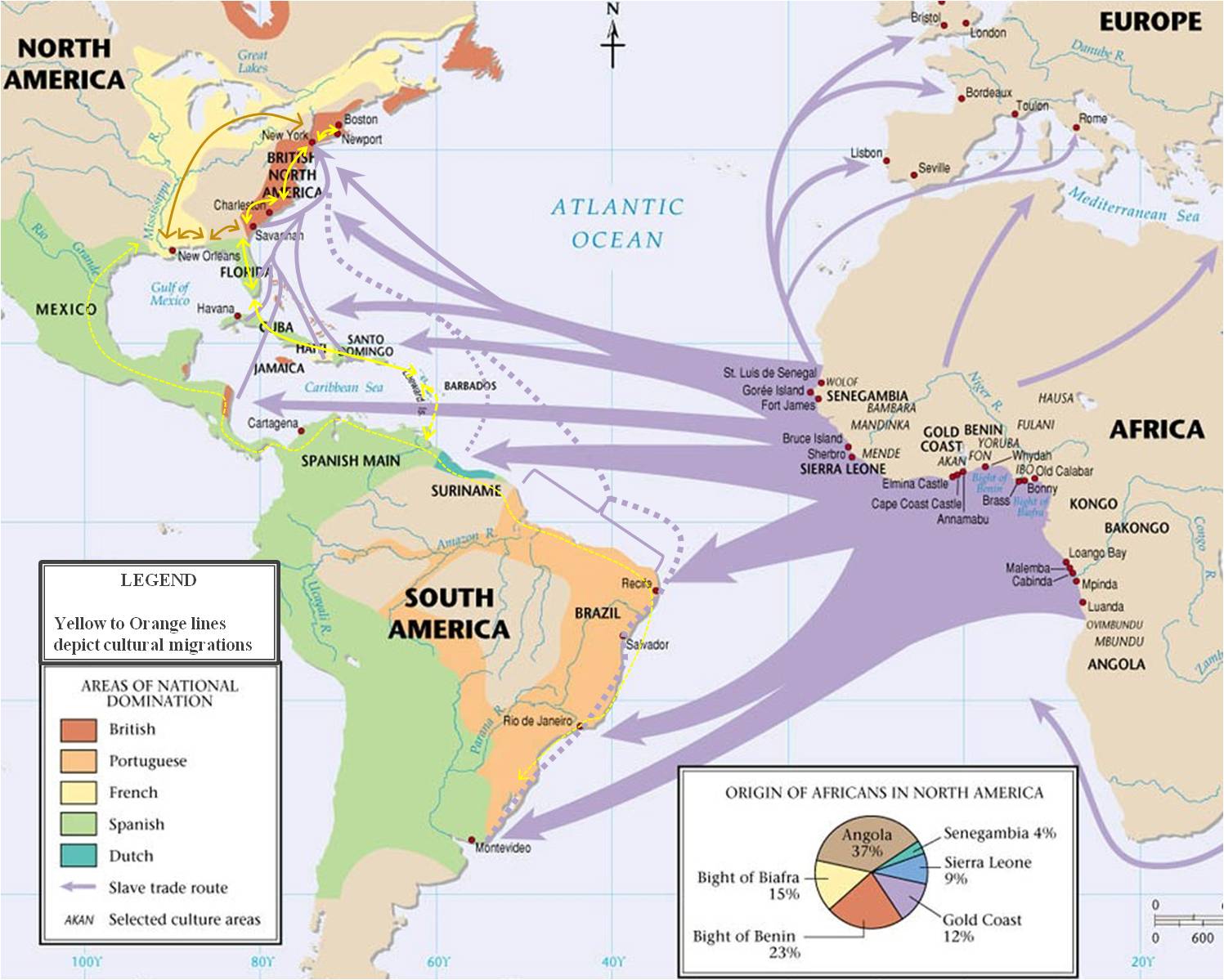
An older example of cultural diffusion/globalization

Globalization has not been very beneficial for all cultures. Some are being forced to conform to modern cultures and to disregard their traditions in order to be accepted. Also, a sort of homogeneity has begun to take over world culture as more and more people become connected through the internet. Lines between cultures are starting to blur as they modernize and try to appeal to the younger generations. Cultures like the Akha people of Northern Laos that we learned about in class are disappearing as more and more people leave their traditions behind for contemporary lifestyles. Some may say that their lives are better because of it, but that doesn’t change the fact that we are losing amazing unique cultures to globalization.

Wednesday, August 27, 2014

WATER PRIVATIZATION - THE NESTLE CONTROVERSY


            According to the United Nations, drinkable water is a basic human right. You would think that means that all human beings are entitled to clean, fresh drinking water, but big companies like Nestle are beginning to challenge that. Water privatization is becoming an issue very quickly, as fresh water supplies continue to deplete.
            Peter Brabeck, chairman of the food and drink company Nestle, brought this controversy into mainstream awareness. In 2005, he released a video about food security. In this video, there is a clip that continues to circulate of him claiming that the right to water is “extreme” and the world would be better off if the distribution of water was privatized. However, in a video released 2013, Brabeck claims that water is indeed a human right. This apparent flip-flopping has left many people confused or outraged at Nestle. It all boils down to this: should we or should we not allow water privatization to occur?
            Technically speaking, water has already been privatized. In most of the U.S., you can buy bottled water in a store, school cafeteria, or restaurant, but you also have the option to drink tap water or other fresh water. In many other countries people don’t have those same options, even in certain places in the U.S. Giving everyone access clean, drinkable water has long been a problem, but now there is the added issue of allowing big corporations like Nestle to take over the distribution.
            Different corporations have different stances on exactly how far to take water privatization. When most people hear the words “water privatization,” they immediately call foul and become enraged that big companies are trying to take water away from them. Yes, some of these corporations do want to market water as a symbol of wealth or sell it for their own profit, but not all of them do.  Some, like Nestle claims, only want to raise awareness of the scarcity of water and make people understand how precious it is. Peter Brabeck claims that he and the company Nestle are just trying to push for more efficient water management and distribution. Whether or not this is their true intention is hard to say.
            In Europe, the threat of water privatization is more pressing. The European Commission (EU) has been pushing an agenda to privatize the water industry in Germany. The people fear many different possibilities that may come from this, such as lower water quality, misuse of profits, and forced privatization.
            Yet another reason why water privatization is becoming such an issue is its effect on areas that already have a dangerously low water supply. A recent example is the massive drought currently occurring in California. Evidently, Nestle has been drawing out massive amounts of water to bottle and sell from California, regardless of the drought. While Californians are being advised to conserve their water as much as possible, a large, wealthy corporation is apparently draining the remaining water resources for profit. There is concern that this will become a pattern if water distribution is privatized.

Read more about this issue in the articles linked below. Watch the videos of Peter Brabeck understand the confusion over Nestle’s stance on water.


Monday, April 28, 2014

Education Public Policy - National Graduation Rate Up to 80% (UNIT 5)

US public schools reach graduation milestone, new report says

High School Graduation caps.jpg 
Education public policy has helped to improve the public school graduation rate in the United States drastically over the past several years. More measures are being taken to ensure that students do not dropout, from more one-on-one contact with students to shutting down schools with high dropout rates. The current graduation rate is around 80 percent, and researchers are beginning to predict a 90 PERCENT national graduation rate by 2020.
http://www.washingtonpost.com/blogs/wonkblog/files/2013/01/OB-VZ550_HIGHSC_E_20130115113335.jpg
The current data and public policy's success is amplified by the decrease in minority and low income dropouts. There has been a decrease as well in "dropout factories" (schools that produce high amounts of dropout students). If the rate remained the same from the early 2000s, studies show that around 1.7 million students would have dropped out between then and now.

Various changes in state laws and government intervention has aided this improvement. Many people are giving their own advice for how the United States can get its graduation rate up to 90 percent. Even though there has been minimal improvement in other areas, education has certainly been successful in, at the least, keeping more students in school. Current public policies about education are providing positive results that will hopefully continue to trend positively for some time.

Monday, April 7, 2014

Revamping the Bureaucracy - Civil Service Reform(UNIT 4 PART 3)

According to the article, it is time for reform of the Federal civil service system. The author claims that the system is over 60 years old, and, without rigorous reform, it will have major consequences for our country. The article blames the hiring, training, promoting, and classifying mechanisms of the bureaucracy to be the problem. In the bureaucracy, the merit system is used to hire new workers, and the Pendleton Act assures that civil service employees are hired based on merit, not patronage. 
The author cites several surveys and studies about the topic. She says that the system is still set up for clerical government jobs, but most Federal jobs are now "knowledge-based." She claims that the competition for the "nation's top talent" is too high, and the government isn't getting enough. The article lists ways for the government to revamp the bureaucracy systems, such as changing the way workers are paid, reexamining the General Schedule classification system, and giving more flexibility to hiring standards. It concludes by stating that the civil service is in dire need of reform, and that while legislation has yet to be proposed, some politicians are considering opening up conversation about it.

Monday, March 24, 2014

Congress & the U.S. Budget - Time is Money (UNIT 4 PART 1)


The article discusses the opinions of the House Minority Whip, Steny Hoyer, toward the current debate about the U.S. budget. He claims that if a "grand bargain"is not reached soon, the U.S. will lose its position as the world's top economic power. He wishes for the divided parties of Congress to come together in bi-partisanship to decide on an effective budget for the year. Using a lot of exaggeration and scare-tactics, Hoyer appeals to the concerns of the American people. The current turmoil between the parties, President Obama's own budget proposal, and many legislators preparing for reelection campaigns is making an effective bi-partisan compromise seem like a weighty task.

The concern of an upcoming stalemate-like situation in the House is growing. As election day gets closer, more and more Congressmen are more concerned about getting reelected than passing new legislation that may be detrimental to their platforms. The Minority Whip claims that even with these limitations, Congress can still do things to improve the economic outlook over the next few years. He believes that there are still many opportunities to help achieve fiscal stability.

Monday, March 3, 2014

The Two-Party System - How it is Affecting America (UNIT 3)


The article explains the differences between the two major parties of the United States - the Republican Party and the Democratic Party - and their true definitions and ideals. The author describes each party as they are meant to be in their purest state. The Republicans are meant to stand for a minimal government, while the Democrats support a more extensive state.

The author begins the article by discussing how American politics have morphed into an ugly battleground between the two parties. The author claims that each party is becoming more and more concerned with winning the "spoils" for themselves, as opposed to working together for the greater good of the country. He compares the Republicans and Democrats to gangs fighting over power. He implies that the parties are straying farther and farther from their original ideals.

America's current two-party system allows very little room for third parties, regardless of if they are doctrinal parties, bolter parties, or single-issue parties. A few prominent third parties have arisen in our government, such as the Green Party or the Libertarians, but they struggle to gain enough power to make much different. There is no question that America relies solely on its two-party system, but it's hard to say whether or not it is truly detrimental to our politics.